 AI Ed
AI Ed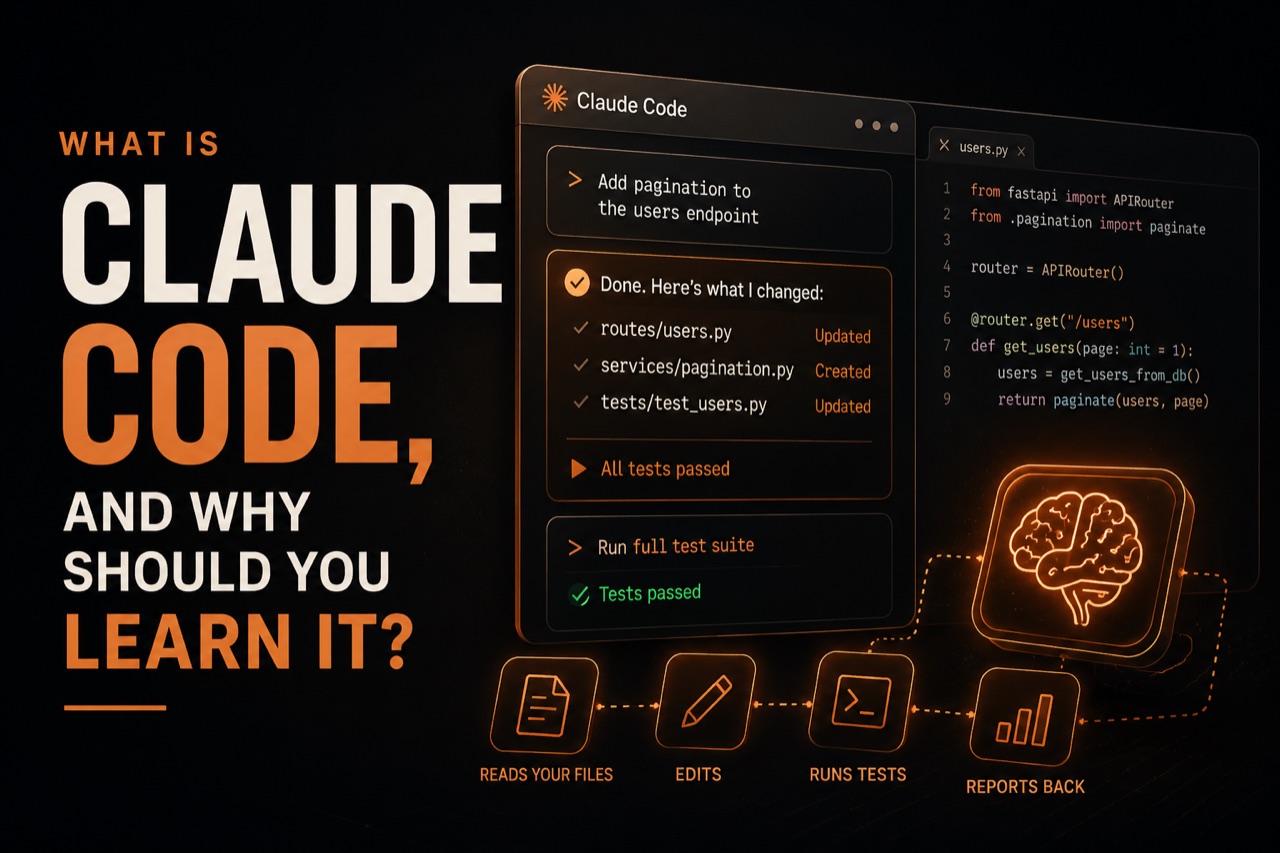
Claude Code
What is Claude Code, and why should you learn it?
Most coding assistants finish your line. Claude Code does the task. You tell it what you want in plain language, and it reads your files, edits them, runs your tests, and reports back. That shift, from autocomplete to a teammate that takes actions, is what people mean by "agentic" coding.
Autocomplete vs. an agent
An autocomplete tool guesses the next few tokens while you type. Useful, but you still drive every keystroke. An agent works at the level of a request. Ask it to "add pagination to the users endpoint and update the tests," and it figures out which files to touch, makes the edits, and runs the suite to check its own work.
The difference shows up most on the boring jobs: renaming a concept across 30 files, wiring a new dependency, writing the tests you keep postponing. You stay in charge of intent and review. The agent handles the typing.
You describe the outcome. It does the legwork. You review the result.
Why learn it now
- The bottleneck moved. When typing speed stops limiting you, clear thinking and clear instructions become the skill that matters. That skill takes practice.
- Good prompts are a craft. Vague requests get vague code. Learning how to scope a task, give context, and check the output is most of the job.
- It rewards people who understand their codebase. The agent works best when you can tell it what "done" looks like and spot when it gets there.
What you actually need to know
Driving Claude Code well comes down to a few habits: give it the right context, break big asks into reviewable steps, read its diffs instead of rubber-stamping them, and lean on tests so mistakes surface fast. None of this is magic. It is a workflow, and like any workflow you get better by doing it on real tasks.
How AI Ed teaches it
The Master Claude Code track walks you from your first command to multi-step agent workflows, one short lesson at a time. You read a concept, then practice it, so the habits stick instead of staying theory. Stage one is free, so you can see how it feels before you commit.